The US counterrevolution | Electric World Order | 05
Coalitions --> bottomless mimosas --> backlash ---> hydrocarbon projection
By Tim Sahay, Kate Mackenzie —
In the fifth and final episode of our first podcast season, we look at how the world's most powerful country made a significant shift towards the energy future early in the 2020s, only to lurch back towards its fossil fuel legacy with the re-election of Trump in 2024. The US may not rely on oil revenues like a traditional petrostate, but its political system is deeply entangled with fossil fuel interests; maintaining that now requires a kind of denial of the change that's taking place in most of the rest of the world's energy systems.
Our guests for this episode are Rhiana Gunn-Wright and Ted Fertik – both of whom played critical roles in the policy work and the diverse political coalitions that led to Biden administration policies like the Inflation Reduction Act.
Subscribe to the podcast: Apple; Spotify; all platform links.
We recorded these interviews before the current Middle East war; but the content is perhaps even more salient as we contemplate what the resulting jump up in oil and gas demand destruction is going to mean for the US; the world's biggest exporter of both of those forms of hydrocarbon.
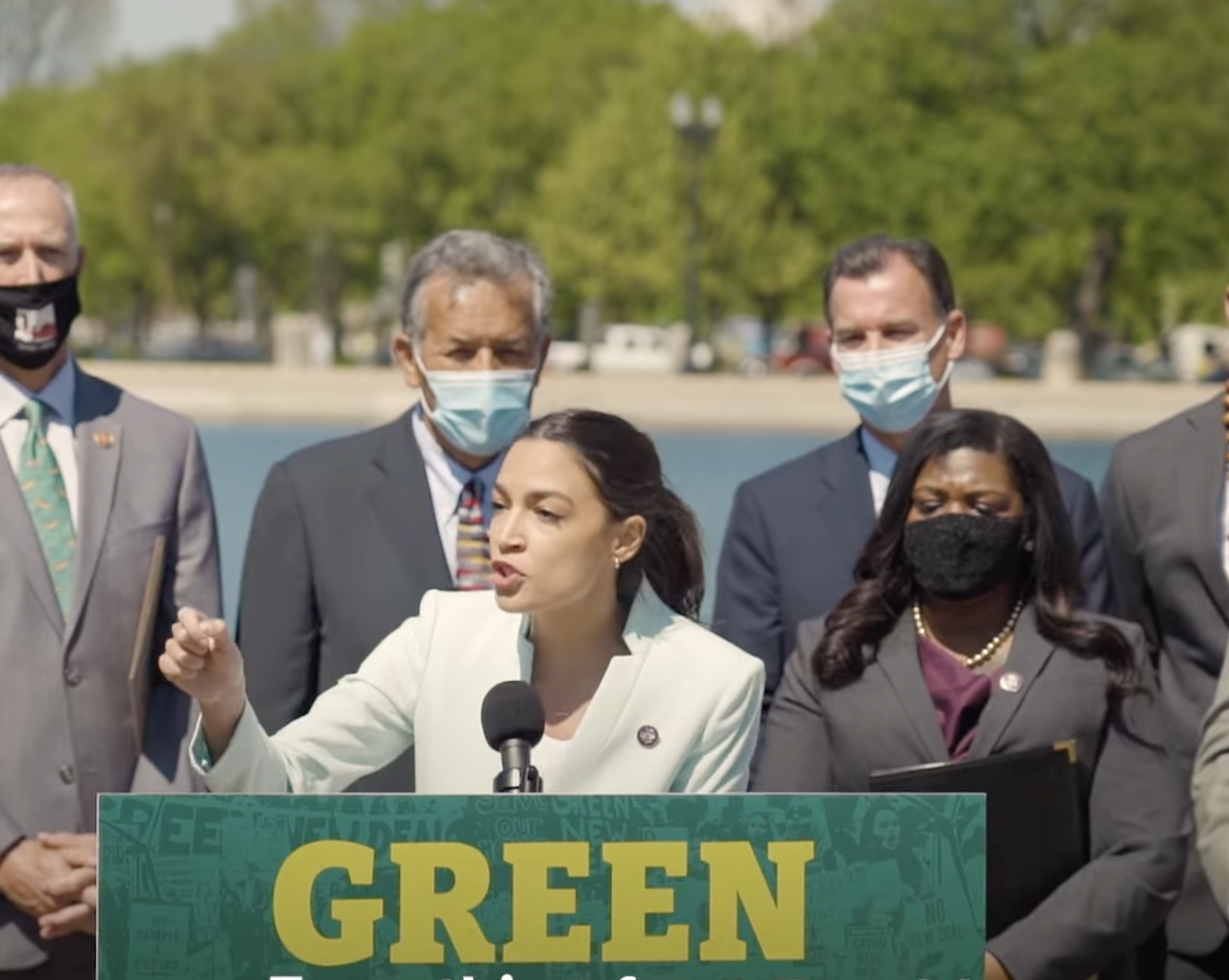
Rhiana, who now advises New York mayor, Zohran Mamdani*, on climate policy, reflects on how that happened, what didn't work, and how the current administration is trying to dominate the energy narrative. She describes the broad Green New Deal momentum as having multiple facets, including Covid-era stimulus and the possibilities of industrial strategy with broad-based appeal:
"I think there was just a lot of hunger for: what is the next engine of American growth gonna be? And something that is not just financialization, something that everyday people could actually see themselves getting jobs in.
Ted, who is now at the BlueGreen Alliance*, elaborates on some of the ideas in his Phenomenal World essay from September on the New Climate Common Sense: "a theory of competition among policy makers, companies, and countries to be first to solve for the post-carbon future". Although that theory took hold among elites around the world from the mid-2010s, the 2024 US election, along with factors like inflation and shrinking fiscal space in other countries made it increasingly challenging. In terms of the US, Ted told us:
"The more that they can convince actors around the world that decarbonization is never going to happen, the less there's any political pressure within the US itself around decarbonization – and the more that those fossil assets that they so prize retain their value um and retain their their value as a source of political power on the world stage."
This is a view that Ted and Kate shared, particularly after the decapitation in Venezuela. The US has clearly long sought to exercise influence over global fossil fuel flows and markets for both geopolitical and domestic reasons; but today, as demand falters, maintaining the global energy system that favours the US is partly a project of maintaining the narrative of a fossil fuel persistence.
We end with Tim:
"Where does the US go if it's lost years in the global electro-tech and cleantech race? Maybe we just see a kind of reversal of what happened after the IRA passed. US allies and competitors will just get those jobs and industries while the US, you know, just boils in its own oil."
Which is, perhaps, what we are seeing now.
Please share our first podcast season with anyone you think might enjoy it! We're planning a quick follow-up season looking at the Middle East war; so there will be more in the feed soon.
Also coming up: We'll also have a new Phenomenal World essay on the implications of the war out later this month (our first big war essay is here).
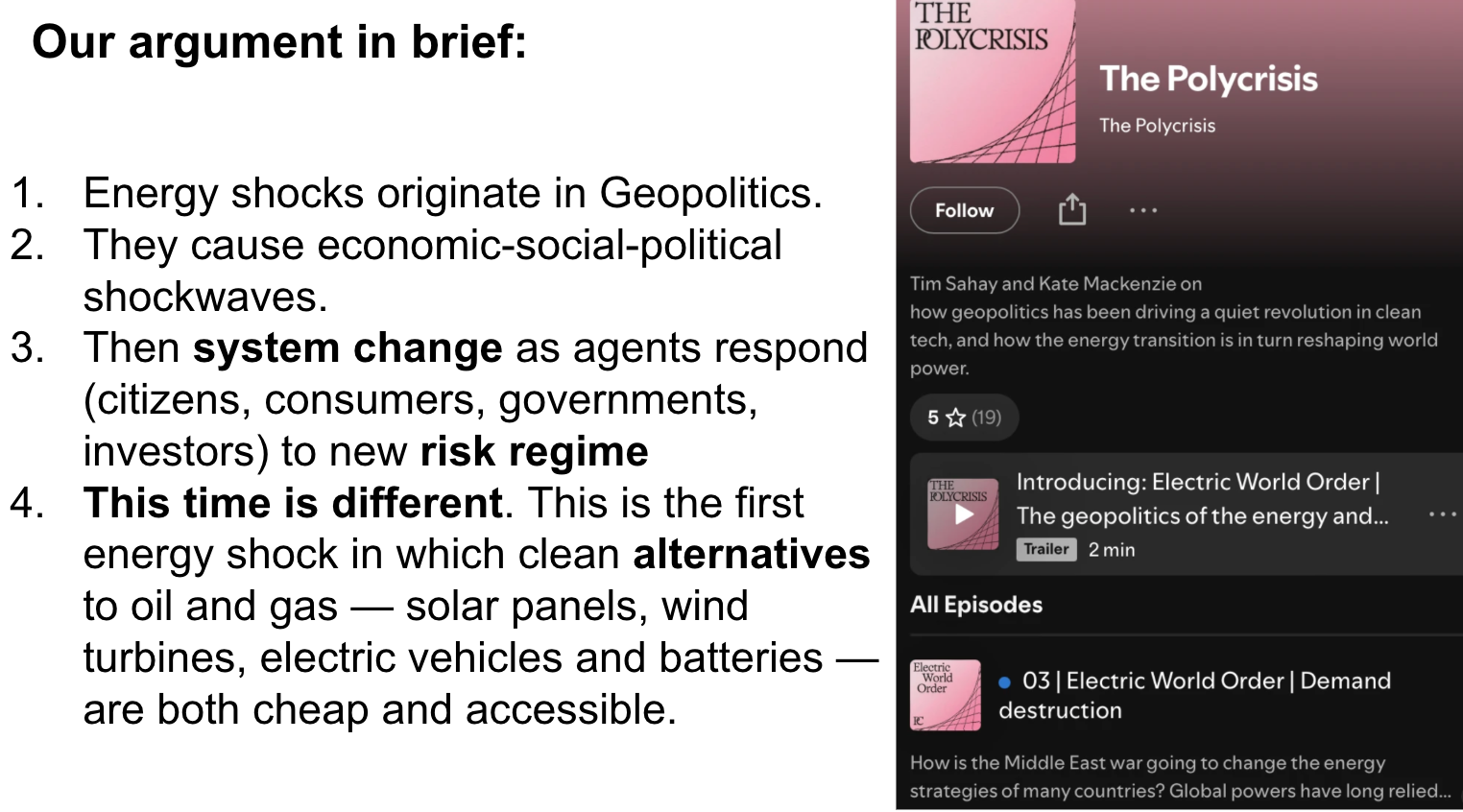
In the meantime, see Tim's epic slide deck from a panel he did at Wesleyan College last week with Thea Riofrancos and Daniel Aldana Cohen.
NB: If you're having trouble receiving this email: we've changed platforms, so please add the-polycrisis@ghost.io to your email whitelist
*Neither Rhianna nor Ted were representing their affiliations or employers in our interviews